





Table of Contents
October 6, 2017: Dimuth Karunaratne was only four runs away from a double century when Wahab Riaz produced the breakthrough Pakistan desperately needed. What followed was an extraordinary Test match in Dubai, where Sri Lanka went from complete control to a position of danger before eventually holding their nerve to beat Pakistan by 68 runs.
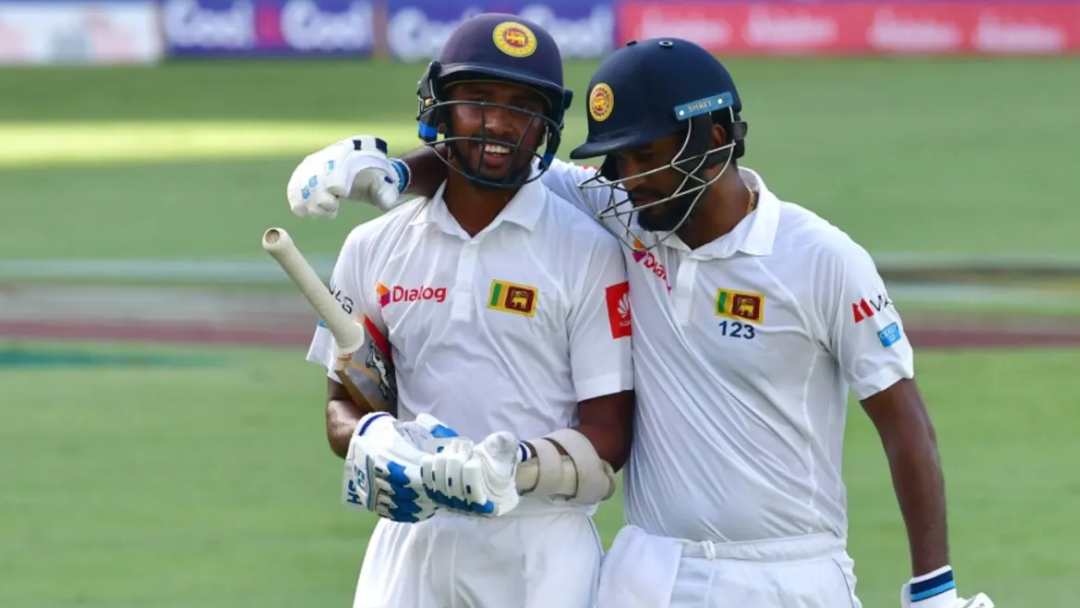
There is something particularly painful about getting out in the 190s. After spending hours at the crease, surviving the bowlers and doing almost everything right, a batter can see the double century getting closer with every run. For Dimuth Karunaratne, that feeling was particularly strong in Dubai in October 2017. He had already spent more than nine hours batting for Sri Lanka, had faced 405 deliveries and had carried his team through a long first innings. He was on 196. Four more runs would have given him his maiden Test double century.
Instead, Wahab Riaz found a way through.
Karunaratne Takes the Fight to Pakistan
Sri Lanka came into the second Test with plenty of confidence after beating Pakistan in the opening match in Abu Dhabi. Pakistan had built a formidable record in the UAE, having gone through nine Test series without losing one there since beginning to play their home matches at neutral venues. Sri Lanka had already ended that unbeaten run in the first Test, and now Pakistan needed a response in Dubai.
When Sri Lanka won the toss and decided to bat, Karunaratne took on the responsibility of setting up the innings. It was not an innings built around reckless strokeplay. Instead, it was the sort of long, patient Test knock that slowly wears a bowling attack down. Pakistan had quality bowlers in their attack, including Wahab Riaz, Mohammad Amir, Mohammad Abbas and Yasir Shah, but Karunaratne kept finding ways to stay at the crease.
He built important partnerships along the way, including a substantial stand with captain Dinesh Chandimal. Chandimal made 62, while Niroshan Dickwella and Dilruwan Perera also contributed half-centuries. But through all those partnerships, Karunaratne remained the constant presence at the other end. Sri Lanka were gradually turning a good start into a huge total.
By the time Karunaratne moved into the 190s, there was no longer any question about whether he had played a great innings. The only question was whether he could reach 200.
He was four runs away.
The Moment Everything Changed
The dismissal came in the 134th over of Sri Lanka's innings.
Wahab Riaz changed his pace and delivered a ball that deceived Karunaratne. The Sri Lankan opener tried to play at it, but the ball took the inside edge, struck his body and then deflected onto the stumps. The bails came off and Karunaratne was gone for 196.
It was a remarkably frustrating way for such a long innings to end. There was no spectacular catch, no huge swing across the line and no unplayable ball that simply ripped through the defence. Karunaratne had been beaten by a change of pace and an unfortunate sequence of deflections.
The scorecard recorded it simply as Karunaratne b Wahab Riaz, 196.
But behind those numbers was a batter who had spent 556 minutes at the crease and faced 405 balls. He had scored 19 fours and one six, and after all that work, he was still four runs short of the milestone he would have wanted most.
For Wahab, however, it was an enormous wicket. Pakistan had finally removed the batter who had been at the heart of Sri Lanka's innings for almost the entire day.
Sri Lanka Put Pakistan Under Pressure
Karunaratne's dismissal came with Sri Lanka already in a commanding position. They eventually reached 482 all out, with Karunaratne's 196 accounting for a huge portion of the total. Yasir Shah fought back with six wickets, but Pakistan still had a difficult task ahead of them.
Pakistan's first innings ended at 262, giving Sri Lanka a lead of 220 runs.
At that stage, the match seemed to be moving decisively in Sri Lanka's direction.
But Test cricket rarely follows a straight line.
Sri Lanka's second innings lasted only 26 overs. The visitors collapsed dramatically and were bowled out for just 96. Suddenly, the advantage they had built through Karunaratne's marathon innings had been reduced to a target Pakistan could realistically chase.
Pakistan needed 317 runs.
For a team that had already been 220 runs behind, this was an opportunity.
And Pakistan almost grabbed it.
Pakistan Collapse — Then Fight Back
The chase began in disastrous fashion for Pakistan.
They were reduced to 52 for 5, and Sri Lanka looked to be heading towards a comfortable victory. The Pakistani top order had struggled to deal with the Sri Lankan attack, and the target that had looked achievable suddenly appeared enormous.
Then came the partnership that completely changed the mood of the match.
Asad Shafiq and Sarfraz Ahmed refused to allow Pakistan to collapse. They put together a huge sixth-wicket partnership and slowly dragged their team back into the contest. Shafiq played one of the finest counter-attacking innings of the match, eventually reaching 112, while Sarfraz contributed 68.
From 52 for 5, Pakistan reached 225 for 5.
That was the point when Sri Lanka's position suddenly looked far less comfortable.
Pakistan needed another 92 runs.
Five wickets remained.
The home crowd had something to believe in.
After being so close to defeat, Pakistan were suddenly close enough to victory to make Sri Lanka nervous.
The Final Twist
This was where the Test produced its final piece of drama.
Sri Lanka finally broke the partnership, and once Sarfraz and the lower order began disappearing, Pakistan's hopes of completing the chase disappeared with them.
The final five wickets fell for only 23 runs.
Pakistan went from 225 for 5 to 248 all out.
Sri Lanka had won the Test by 68 runs.
It was the sort of ending that makes Test cricket so difficult to predict. For long periods, Sri Lanka looked completely in control. Then Pakistan fought back from 52 for 5 and came close enough to make the result genuinely uncertain. In the end, Sri Lanka found the final wickets they needed.
And Karunaratne's first-innings 196 suddenly looked even more valuable.
Four Runs Short, But Match-Winning
Karunaratne did not get his double century.
He did not even get the opportunity to add another run after Wahab Riaz found his edge and the ball found the stumps.
But he left Dubai with something more important than a personal milestone. He was named Player of the Match, and his 196 had provided the foundation for Sri Lanka's victory. He was also named Player of the Series after Sri Lanka completed a 2-0 series win.
The irony of the match was that Karunaratne's 196 was larger than Sri Lanka's entire second innings. His first-innings effort gave them the cushion they ultimately needed when everything started going wrong in the second innings.
Without those 196 runs, Sri Lanka's 317-run target would have been very different.
And without the wickets at the end, Pakistan's remarkable recovery from 52 for 5 might have become one of the greatest successful fourth-innings chases in their history.
That is what makes this match worth remembering.
It was not simply the story of a batter missing a double century.
It was the story of a Test match that kept changing direction.
A Match Full of Near Misses
Karunaratne came within four runs of 200.
Pakistan came within 92 runs of chasing down 317 after being five wickets down for 52.
Sri Lanka came close to throwing away a match after being bowled out for 96 in their second innings.
And Pakistan, after reaching 225 for 5, lost their final five wickets for only 23 runs.
Every time one side appeared to have the match under control, the other side fought back.
That is why Karunaratne's 196 remains more memorable than many routine double centuries.
He missed the milestone.
But he didn't miss the moment.
His innings helped Sri Lanka build the lead that ultimately proved decisive, and the victory ended Pakistan's remarkable unbeaten Test-series record in the UAE. Pakistan had previously gone through nine Test series there without losing one; Sri Lanka left Dubai having won both matches of the series.
On This Day: October 6, 2017
Seven years ago, Dimuth Karunaratne walked back to the dressing room with 196 runs beside his name, knowing he had come painfully close to a double century.
Wahab Riaz had ended the innings.
But Sri Lanka eventually ended the match.
Karunaratne's 196, Pakistan's fightback from 52 for 5, the collapse from 225 for 5 and Sri Lanka's 68-run victory combined to make this one of those Test matches that is remembered for far more than the final score.
For anyone looking at the scorecard today, the numbers tell a simple story: Sri Lanka 482 and 96, Pakistan 262 and 248, Sri Lanka won by 68 runs.
But the story behind those numbers was anything but simple.
Four runs separated Karunaratne from 200. Sixty-eight runs separated Sri Lanka from defeat.
And on this day in 2017, both numbers became part of the story.
Read the full Pakistan vs Sri Lanka 2nd Test scorecard and match details on CricketSky →
Match at a glance
Match: Pakistan vs Sri Lanka, 2nd Test
Date: October 6–10, 2017
Venue: Dubai International Cricket Stadium
Sri Lanka: 482 & 96
Pakistan: 262 & 248
Result: Sri Lanka won by 68 runs
Player of the Match: Dimuth Karunaratne
Top score: Dimuth Karunaratne — 196 (405 balls)
Pakistan's second-innings top score: Asad Shafiq — 112
Key bowling performance: Yasir Shah — 6/184
Match scorecard: CricketSky