





Table of Contents
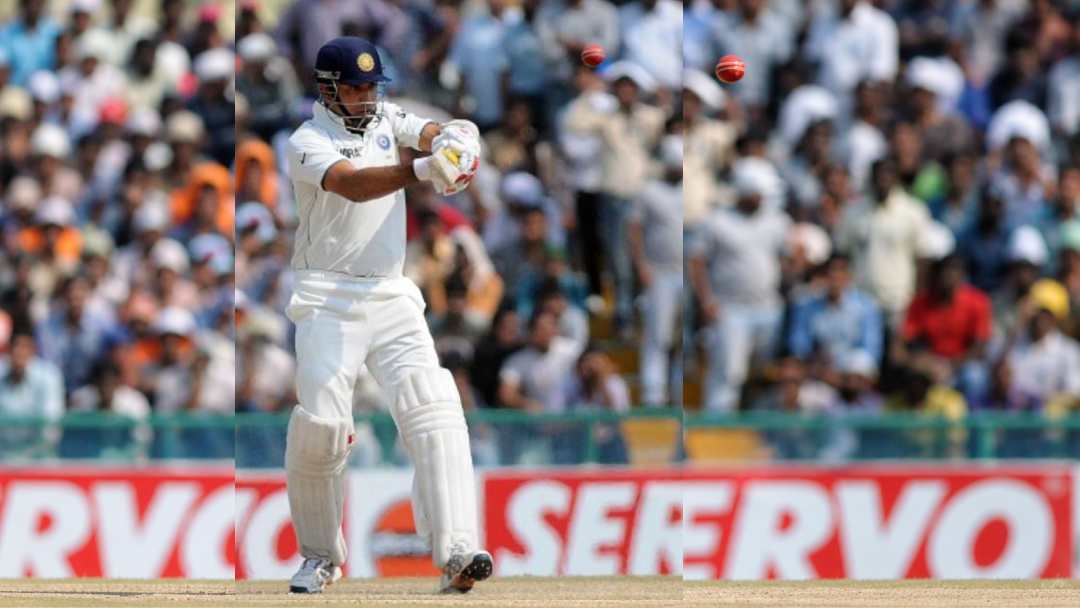
October 5, 2026: Sixteen years ago today, Indian cricket witnessed one of its most dramatic Test victories. With India reduced to 124/8 while chasing 216 against Australia in Mohali, defeat appeared almost certain. But VVS Laxman, struggling with a painful back injury, produced an extraordinary unbeaten 73 to guide India to a sensational one-wicket victory on October 5, 2010.
It wasn't a match dominated by a double century or a spectacular bowling spell in the final innings. Instead, it was a contest decided by a batter who could barely move freely, a fast bowler who refused to give up and a No. 11 who somehow survived one of the most tense finishes in Indian Test history.
India Were 124/8 and Australia Were Closing In
The opening Test of the 2010 Border-Gavaskar Trophy had already produced four days of competitive cricket. Australia scored 428 in their first innings, with Shane Watson contributing 126. India responded with 405, falling 23 runs short despite Sachin Tendulkar's 98. Australia were subsequently dismissed for 192, leaving India with a target of 216.
On paper, it looked achievable for a batting lineup featuring Tendulkar, Rahul Dravid, Virender Sehwag and Laxman. However, Australia's fast bowlers had other plans. Ben Hilfenhaus and Doug Bollinger dismantled India's top order, leaving the hosts struggling at 48/4.
Tendulkar offered some resistance with 38, but his dismissal was followed by further wickets. When Harbhajan Singh departed, India were 124/8, still requiring another 92 runs. Australia had every reason to believe they were about to secure a famous victory on Indian soil.
What a finish! Famous India victory!
— Rob Moody (@robelinda2) October 5, 2020
On the day 2010.... Aussie heartbreak
The great VVS Laxman masterminded a 216 run chase in the 4th innings of the 1st test at Mohali
What a finish! pic.twitter.com/TtVeF2g66A
An Injured Laxman and Ishant Sharma Changed Everything
Laxman had been suffering from back spasms and was forced to use a runner during the match. His physical condition was so troublesome that he had batted at No. 10 in India's first innings. Yet, with the match slipping away, the experienced batter delivered an innings that would become one of the defining moments of his career.
His unlikely partner was Ishant Sharma, a specialist fast bowler who was hardly expected to rescue India with the bat. While Laxman continued to find boundaries, Ishant concentrated on survival, defending patiently and taking advantage of scoring opportunities.
Together, they added 81 runs for the ninth wicket. Ishant contributed 31 from 92 deliveries, including five boundaries, while Laxman kept India's hopes alive with a remarkable display of determination and controlled aggression.
The partnership transformed the contest. What had looked like a comfortable Australian victory suddenly became a genuine opportunity for India. However, there was still another dramatic twist waiting.
The Final 11 Runs Produced Extraordinary Drama
India had reached 205 when Ishant was adjudged LBW to Hilfenhaus. The decision was controversial, but it left India needing another 11 runs with only Pragyan Ojha remaining.
Laxman now faced an even more difficult task. He had to score the remaining runs while protecting the last batter against an Australian attack determined to finish the job.
The closing moments were chaotic. Australia missed a run-out opportunity, conceding four overthrows, while Ojha survived a tense LBW appeal. Laxman was visibly animated as he tried to communicate with his partner and runner during the final stages.
Eventually, two leg-byes off Mitchell Johnson completed the chase. India finished on 216/9, securing a remarkable one-wicket victory as the players and spectators celebrated an extraordinary escape.
Why Laxman's 73 Remains One of India's Greatest Test Innings
Laxman finished unbeaten on 73 from just 79 deliveries, hitting eight boundaries. His innings was particularly remarkable because he achieved it while dealing with significant physical discomfort and the pressure of watching India's batting lineup collapse around him.
Although Laxman's contribution dominated the headlines, Ishant's 31 was equally important to the outcome. Without his resistance, India would almost certainly have struggled to get close to the target.
Zaheer Khan was named Player of the Match for his eight wickets across Australia's two innings. His bowling had ensured India remained competitive, while Laxman's extraordinary finish secured the victory.
For Indian cricket supporters, the Mohali Test remains a reminder that some of the game's greatest performances cannot be judged by runs alone. Laxman's unbeaten 73 was not his biggest Test innings, but the circumstances, his injury and the dramatic finish made it unforgettable.
Sixteen years later, October 5 remains a special date in Indian cricket history — the day an injured Laxman and an unlikely batting partner turned an almost certain defeat into one of India's most memorable Test victories.